


The Eco-Friendly Benefits of Rattan as a Furniture Material
- aksata woodcraft
- Mar 29, 2025
- 2 min read

The Eco-Friendly Benefits of Rattan as a Furniture Material
Primary keyword: eco-friendly rattan furnitureSecondary keywords: sustainable furniture material, rattan environmental benefits, natural rattan furniture, green interior design, renewable furniture resources
Introduction: Natural Style with a Sustainable Heart
As eco-conscious living becomes a global priority, designers and consumers are seeking materials that not only look beautiful—but also tread lightly on the planet. Enter rattan, one of the most eco-friendly furniture materials available today.
Lightweight, durable, and endlessly versatile, rattan furniture brings nature into your home while supporting sustainable design practices. Here’s why rattan is the go-to choice for those who care about both aesthetics and the environment.
1. Rapid Renewability
Unlike hardwood trees that take decades to mature, rattan grows extremely fast—some species up to 7 centimeters per day. It can be harvested in as little as 2–3 years, making it a highly renewable resource.
This means that rattan can meet furniture demand without depleting forests, making it one of the most responsible choices for long-term production.
2. Low-Impact Harvesting
Rattan is harvested by hand using simple tools, and the plant does not need to be uprooted. This allows the vine to regenerate naturally, without causing soil erosion or deforestation.
In fact, rattan harvesting can support forest preservation, because it creates economic value for intact ecosystems—encouraging communities to protect rather than clear-cut native forests.
3. Biodegradable and Non-Toxic
As a natural material, rattan is 100% biodegradable. Unlike plastic or synthetic furniture, it won’t sit in a landfill for centuries. It also requires minimal chemical processing, especially when finished with water-based or natural oils, making it safer for both indoor air quality and the environment.
4. Energy-Efficient Production
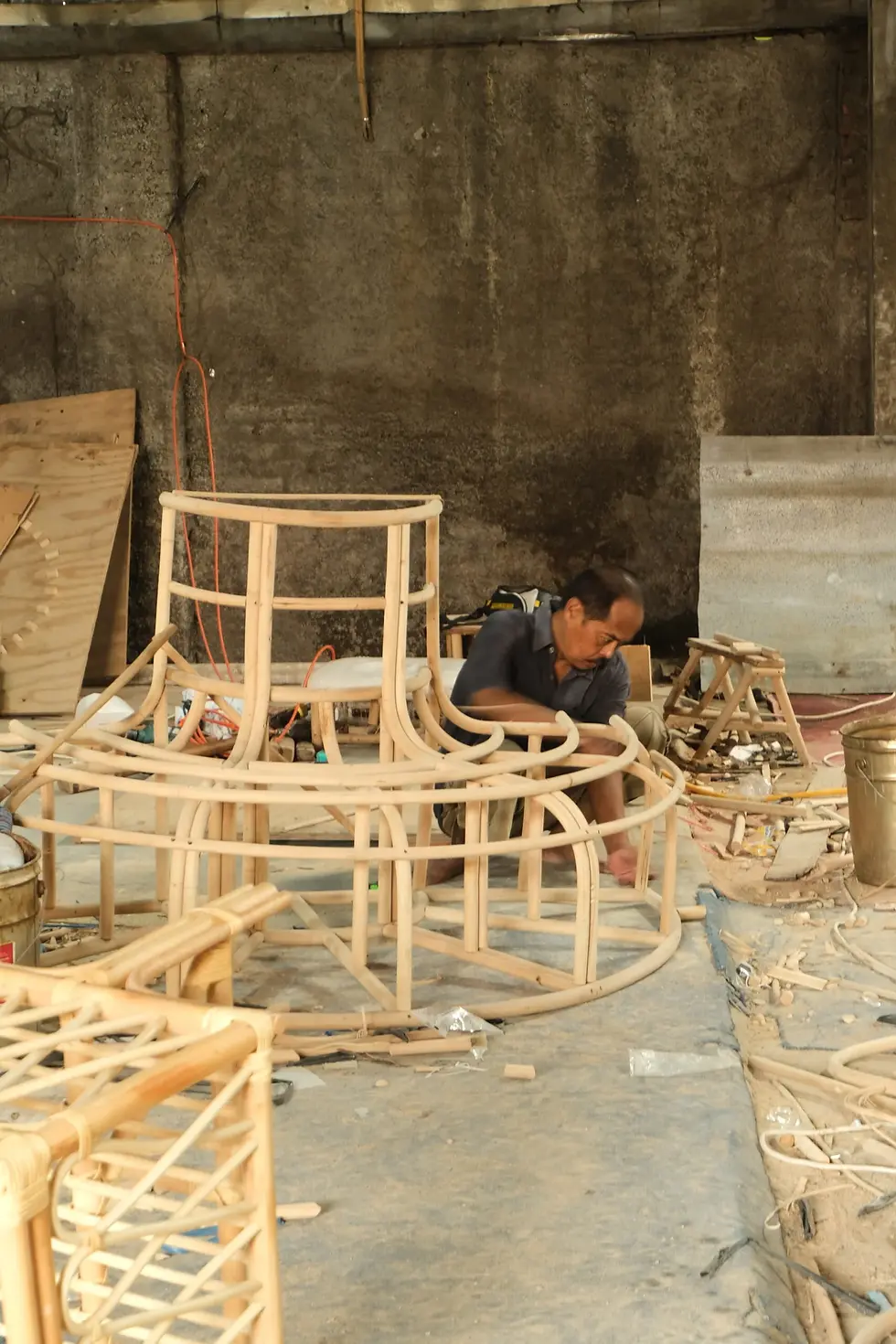
Because rattan is soft and flexible, it requires less energy to process compared to metals, plastics, or hardwoods. Most rattan furniture is also handmade, significantly lowering the carbon footprint of production.
No heavy machinery. No toxic emissions. Just craftsmanship powered by skill—not fuel.
5. Lightweight for Greener Shipping
Rattan furniture is lightweight but strong, reducing energy usage in shipping and logistics. Whether shipped locally or internationally, it takes less fuel to move—making your furniture choices more climate-friendly from factory to front door.
6. Long-Lasting and Repairable
Sustainability also means durability. Rattan furniture is known for lasting 10+ years with proper care. And when it does wear, it can often be repaired or re-woven rather than discarded—extending its life cycle and reducing waste.
7. Perfect for Green Interior Design
Rattan’s natural tones and organic texture make it a favorite among eco-conscious designers. It fits seamlessly into:
Biophilic design
Coastal and tropical interiors
Minimalist or Scandinavian spaces
Boho-chic and modern rustic aesthetics
That’s sustainability with style.
Conclusion: A Smarter, Greener Furniture Choice
Choosing eco-friendly rattan furniture means making a positive impact—on your space, your well-being, and the planet. From its rapid renewability to low-impact craftsmanship, rattan proves that sustainable furniture can be elegant, functional, and future-ready.
At Aksata Rattan, we proudly turn this natural material into world-class furniture that supports people, planet, and design progress.


Comments